When it comes to circuit breakers, most electrical designers must be familiar with them. However, when it comes to the selection and tuning of circuit breakers, many electrical designers may be ignorant of this, and some novices in electrical design are even more ignorant. We are all automatic circuit breaker, as the name suggests, is used to disconnect the circuit of the instrument, it is mainly used in the transmission and use of electricity, in the distribution link is essential, can avoid excessive voltage load caused by circuit damage, electrical equipment damage and other problems. Once the current is too large, or there is a short circuit, undervoltage and other faults, it will automatically cut off the circuit to ensure safety. There are many model parameters of circuit breaker, when we select circuit breaker, we should select the use category according to the specific use conditions, select the rated working voltage, rated current, setting current of the tripper and other parameters, select the protection characteristics with reference to the protection characteristic curve provided by the product sample, and need to verify the short-circuit characteristics and sensitivity coefficient. So, how should the circuit breaker be selected and tuned? The following article will tell you in detail, and after reading the article, I hope to give some reference to the majority of electrical designers.
01 Types of circuit breakers and their functions
(1) Frame type circuit breaker (ACB)
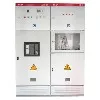
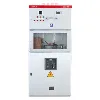
Frame circuit breaker, also known as universal circuit breaker, all its parts are installed in an insulated metal frame, often open, can be installed with a variety of accessories, it is more convenient to replace contacts and components, and is mostly used in the main switch at the power end. There are several types of overcurrent trippers, such as electromagnetic, electronic and intelligent trippers. The circuit breaker has four stages of protection: long delay, short delay, instantaneous and ground fault, and the setting value of each protection is adjusted within a certain range according to its shell level.
The frame circuit breaker is suitable for AC 50Hz, rated voltage 380V, 660V, rated current of 200A-6300A in the distribution network, mainly used to distribute electric energy and protect lines and power equipment from overload, undervoltage, short circuit, single-phase grounding and other faults. Under normal conditions, it can be used for infrequent conversion of lines. Circuit breakers below 1250A can be used to protect the motor from overload and short circuit in a network with an AC 50Hz voltage of 380V.
Frame circuit breakers are also often used in transformer 400V side outlet main switches, bus contact switches, high-capacity feeder switches and large motor control switches.
(2) Molded Case Circuit Breaker (MCCB)
The molded case circuit breaker, also known as the device circuit breaker, is housed in a plastic shell with the outer contact of the grounding wire terminal, the arc extinguisher, the tripper and the operating mechanism. Auxiliary contacts, undervoltage trippers and shunt trippers are mostly modular, very compact in structure, generally do not consider maintenance, and are suitable for protection switches used as branches. Molded case circuit breakers usually contain a thermomagnetic trip unit, while larger molded case circuit breakers are equipped with a solid-state trip sensor.
There are two kinds of overcurrent trippers of molded case circuit breakers: electromagnetic and electronic, the general electromagnetic molded case circuit breaker is a non-selective circuit breaker, and there are only two protection modes: long delay and instantaneous, and electronic molded case circuit breaker has four protection functions: long delay, short delay, instantaneous and grounding fault. Some of the new products of electronic molded case circuit breakers also have a region-selective interlocking function.
Molded case circuit breakers are generally used for distribution feeder control and protection, low-voltage side outlet main switch of small distribution transformer, power distribution terminal control, and can also be used for power switch of various production machinery.
(3) Miniature Circuit Breaker (MCB)
Miniature circuit breaker is the most widely used terminal protection appliance in the introduction of building electrical terminal distribution devices. It is used for single-phase and three-phase short circuit, overload, overvoltage and other protection below 125A, including single-pole 1P, two-pole 2P, three-pole 3P, and four-pole 4P.
The miniature circuit breaker is composed of an operating mechanism, a contact point, a protective device (various trippers), an arc extinguishing system, etc. The main contact is either manually operated or electrically closed. After the main contact is closed, the free trip mechanism locks the main contact in the closing position. The coil of the overcurrent tripper and the thermal element of the thermal tripper are connected in series with the main circuit, and the coil of the undervoltage tripper and the power supply are connected in parallel.
In the electrical design of civil buildings, miniature circuit breakers are mainly used for overload, short circuit, overcurrent, loss of voltage, undervoltage, grounding, leakage, automatic switching of dual power supplies and protection and operation of infrequent start of the motor.
▶ 02 Relevant technical parameters of circuit breaker
(1) Rated working voltage Ue
The rated operating voltage refers to the nominal voltage of the circuit breaker, which can be operated continuously under the specified normal use and performance conditions.
China stipulates that at the voltage level of 220kV and below, 1.15 times of the rated voltage of the system is the maximum working voltage, and the voltage level of 330kV and above is 1.1 times of the rated voltage as the maximum working voltage. The circuit breaker can maintain insulation at the maximum operating voltage of the system, and can be closed and broken under specified conditions.
(2) Rated current In
The rated current refers to the current that can pass through the tripper for a long time at an ambient temperature of 40°C or less. In the case of circuit breakers with adjustable trippers, this is the maximum current that can be passed through the trippers for a long time.
When used at an ambient temperature of more than 40°C, but not higher than 60°C, it is allowed to work with a reduced load for a long time.
(3) The current setting value of the overload tripper is Ir
If the current exceeds the current setting value of the tripper Ir, the circuit breaker will trip with a delay. It also represents the maximum current that the circuit breaker can withstand when it is not tripped. This value must be greater than the maximum load current Ib, but less than the maximum allowable current Iz for the line.
Mar 07, 2024
Leave a message
How to select and tune the circuit breaker
Send Inquiry