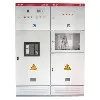
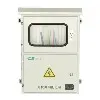
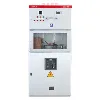
First, the importance of circuit breaker protection
In the power system, circuit breaker protection is a necessary means to protect equipment, and the following describes the content of it.
2. Overcurrent protection
Overcurrent protection is the most basic protection in circuit breaker protection, and it is also one of the earliest applied protection methods. When the current exceeds the rated current, the overcurrent protection action will be triggered, so as to realize the timely opening of the circuit breaker and protect the devices in the power system.
3. Short-circuit protection
Short-circuit protection is the most frequently performed protection in the power system, which is used to detect short-circuit faults in the circuit and cut off the fault current in time. When the current exceeds 6 to 10 times the rated current per phase, the short-circuit protection device is triggered to activate the circuit breaker and cut off the fault current in the circuit.
Fourth, under-frequency protection
Underfrequency protection is also an important part of circuit breaker protection. When abnormal fluctuations in voltage or frequency lead to heavy load on the power grid, voltage decrease, motor speed drop and other phenomena, when the underfrequency protection detects that the voltage or frequency of the power system is reduced below the preset value, it will automatically cut off the power system, thereby limiting the scope of the fault and protecting the safety of the equipment.
5. Over-frequency protection
Over-frequency protection is also one of the commonly used protection contents in circuit breaker protection, which is used to protect the safety of equipment when the voltage or frequency fluctuates too much. When the voltage or frequency of the power system rises to a certain level, the overfrequency protection will be triggered to start the circuit breaker action, cut off the current in the circuit, and prevent the occurrence of equipment overload, damage and other events.