

What is the role of DC MCB for solar in a solar - battery charging system?
As a supplier of DC MCB for solar, I've witnessed firsthand the increasing significance of these components in solar - battery charging systems. In this blog, I'll delve into the crucial role that DC MCBs play in such systems, exploring their functions, benefits, and why they are an essential part of any solar setup.
Understanding the Basics of a Solar - Battery Charging System
Before we discuss the role of DC MCBs, it's important to have a basic understanding of a solar - battery charging system. This system typically consists of solar panels, a charge controller, a battery bank, and an inverter. Solar panels capture sunlight and convert it into direct current (DC) electricity. The charge controller regulates the flow of electricity from the solar panels to the battery bank, preventing over - charging and over - discharging of the batteries. The battery bank stores the electrical energy for later use, and the inverter converts the DC electricity from the batteries into alternating current (AC) electricity for use in homes or businesses.
The Role of DC MCB in a Solar - Battery Charging System
1. Over - current Protection
One of the primary functions of a DC MCB in a solar - battery charging system is to provide over - current protection. Solar panels can generate a significant amount of current, especially under ideal sunlight conditions. If there is a short - circuit or a fault in the system, the current can spike to dangerous levels. A DC MCB is designed to detect these abnormal increases in current and automatically trip, cutting off the electrical circuit. This protects the solar panels, the charge controller, the battery bank, and other components in the system from damage due to excessive current.
For example, if a wire in the system becomes frayed or damaged, it can cause a short - circuit. Without a DC MCB, the high current could overheat the wires, potentially leading to a fire. However, when a DC MCB is installed, it will sense the over - current and disconnect the circuit within milliseconds, preventing any serious damage.
2. Isolation
DC MCBs also serve as isolation devices in a solar - battery charging system. During maintenance or in case of an emergency, it is necessary to isolate different parts of the system. A DC MCB can be manually turned off to disconnect the power supply to a specific section of the system. This allows technicians to work safely on the system without the risk of electric shock.
For instance, if a battery in the battery bank needs to be replaced, the DC MCB can be used to isolate the battery bank from the rest of the system. This ensures that there is no electrical current flowing through the battery bank while the replacement is being carried out.
3. Fault Detection and System Monitoring
In addition to over - current protection and isolation, DC MCBs can also be used for fault detection and system monitoring. Some advanced DC MCBs are equipped with sensors that can detect other types of faults, such as over - voltage or under - voltage conditions. These MCBs can send signals to a monitoring system, allowing operators to quickly identify and address any issues in the system.
For example, if the voltage in the system exceeds the safe operating range, the DC MCB can detect this and send an alert to the monitoring system. This enables operators to take corrective action before any damage occurs to the system components.
Benefits of Using DC MCBs in Solar - Battery Charging Systems
1. Enhanced Safety
The most significant benefit of using DC MCBs in solar - battery charging systems is enhanced safety. By providing over - current protection and isolation, DC MCBs reduce the risk of electrical fires, electric shocks, and damage to system components. This is especially important in solar installations, where high - voltage DC electricity is involved.
2. Improved System Reliability
DC MCBs help to improve the reliability of solar - battery charging systems. By preventing damage to components due to over - current or other faults, they reduce the likelihood of system failures. This means that the solar system can operate more consistently, providing a reliable source of electricity.
3. Easy Maintenance
DC MCBs are relatively easy to install and maintain. They can be easily replaced if they become faulty, and their manual operation allows for quick isolation of different parts of the system during maintenance. This makes them a practical choice for solar - battery charging systems.
Applications and Compatibility
DC MCBs are suitable for a wide range of solar - battery charging systems, from small residential installations to large commercial and industrial projects. They are compatible with different types of solar panels, charge controllers, and battery banks.

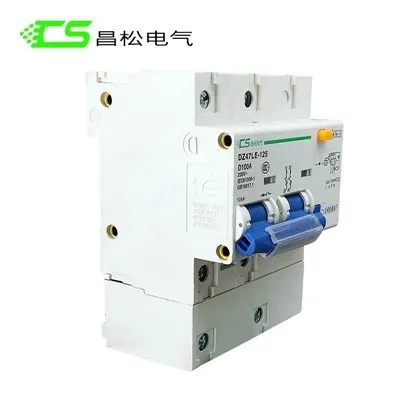
When selecting a DC MCB for a solar - battery charging system, it is important to consider factors such as the rated current, voltage, and breaking capacity. These specifications should be matched to the requirements of the specific solar system to ensure optimal performance.
For more information on related products and design considerations, you can refer to PV Combiner Box Design Balancing Cost, Efficiency, And Reliability. This resource provides valuable insights into the design of PV combiner boxes, which are often used in conjunction with DC MCBs in solar systems.
If you are looking for other circuit - breaker options, our 4 Pole Rcbo might be of interest. It offers additional features and protection capabilities for different electrical applications.
For larger - scale solar projects, our 400KW High And Low Voltage Grid - connected Cabinet provides a comprehensive solution for grid - connected solar systems.
Conclusion
In conclusion, DC MCBs play a vital role in solar - battery charging systems. They provide over - current protection, isolation, and fault detection, enhancing the safety and reliability of the system. As a supplier of DC MCB for solar, I understand the importance of these components in ensuring the efficient and safe operation of solar installations.
If you are in the process of setting up a solar - battery charging system or looking to upgrade your existing system, I encourage you to consider our high - quality DC MCBs. Our products are designed to meet the specific requirements of solar applications, offering reliable performance and long - term durability.
Contact us today to discuss your specific needs and explore how our DC MCBs can benefit your solar project. We look forward to the opportunity to work with you and contribute to the success of your solar installation.
References
- "Solar Photovoltaic Systems: Design and Installation Guide"
- "Electrical Protection in Renewable Energy Systems"


