

How to Label the Terminals of an AC Combiner Box Correctly
As a trusted AC combiner box supplier, I understand the critical importance of correctly labeling the terminals of these boxes. In the realm of electrical systems, especially those related to renewable energy and large - scale power distribution, AC combiner boxes play a pivotal role. Proper terminal labeling is not just a matter of convenience; it is a fundamental safety and operational necessity.
Why Correct Labeling Matters
First and foremost, safety is the most significant reason for accurate terminal labeling. Electrical systems can be extremely dangerous, and misidentifying terminals can lead to short - circuits, electrical shocks, or even fires. For instance, if an electrician accidentally connects a live wire to the wrong terminal due to unclear or incorrect labeling, it can create a hazardous situation for themselves and anyone in the vicinity.
Secondly, correct labeling enhances the efficiency of installation, maintenance, and troubleshooting. When technicians can quickly identify which terminal is for which function, they can complete their tasks in a more timely manner. This reduces downtime in case of system failures and saves both time and money for the end - users.

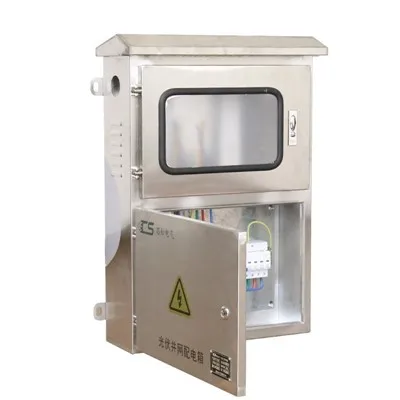
Understanding the Components of an AC Combiner Box
Before diving into the labeling process, it's essential to understand the main components of an AC combiner box. These typically include circuit breakers, busbars, and input/output terminals. The Ac Mccb Breaker Circuit is one of the key elements that protect the system from over - current situations. The busbars serve as conductors that distribute the electrical power from the inputs to the outputs, while the terminals are the connection points for the incoming and outgoing cables.
Step - by - Step Guide to Labeling
- Identify the Input Terminals
- The input terminals are where the incoming AC power cables are connected. These can come from multiple sources, such as solar inverters in a photovoltaic system. Each input terminal should be labeled clearly with the source it represents. For example, if you have three solar inverters feeding into the combiner box, label the terminals as "Inverter 1", "Inverter 2", and "Inverter 3".
- Include the voltage and current ratings associated with each input. This information is crucial for technicians to ensure that the system is operating within safe limits. For instance, if Inverter 1 has an output of 240V and a maximum current of 30A, the label can read "Inverter 1 - 240V, 30A".
- Label the Output Terminals
- The output terminals are connected to the load or the next stage of the electrical system. Similar to the input terminals, they should be labeled according to their destination. If the output is going to a Combined Systems Enclosure, label the terminal as "To Combined Systems Enclosure".
- Provide details about the expected load characteristics. For example, if the load is a three - phase motor with a specific power rating, the label can say "To 3 - Phase Motor, 10kW".
- Label the Circuit Breakers
- Each circuit breaker in the AC combiner box should be labeled with the circuit it protects. This helps in quickly identifying which breaker to switch off in case of a fault. For example, if a breaker is protecting the circuit coming from Inverter 2, label it as "Breaker for Inverter 2".
- Include the breaker's rating, such as its trip current. If the breaker has a rating of 20A, the label can be "Breaker for Inverter 2 - 20A".
- Busbar Labeling
- Busbars can be labeled based on their phase and function. In a three - phase system, label the busbars as "Phase A", "Phase B", and "Phase C". If there are neutral or ground busbars, label them clearly as "Neutral Busbar" and "Ground Busbar" respectively.
Best Practices for Labeling
- Use Durable and Visible Labels
- The labels should be made of materials that can withstand the environmental conditions in which the AC combiner box operates. For outdoor installations, labels should be weather - resistant and UV - stable.
- The text on the labels should be large enough to be easily readable from a reasonable distance. This is especially important for maintenance and troubleshooting purposes.
- Follow Standardized Labeling Conventions
- Adhere to industry - wide standards for electrical labeling. This ensures that all technicians, regardless of their background, can understand the labels. For example, use standard electrical symbols and abbreviations where appropriate.
- Document the Labeling Scheme
- Keep a detailed record of the labeling scheme used in the AC combiner box. This documentation can be invaluable during future maintenance, upgrades, or when new technicians are working on the system.
Challenges in Terminal Labeling and How to Overcome Them
- Space Constraints
- Sometimes, there may not be enough space on the combiner box to place large, detailed labels. In such cases, use abbreviations that are still clear and understandable. For example, instead of writing "Combined Systems Enclosure", you can use "CSE" as long as it is defined in the documentation.
- Changing System Requirements
- As the electrical system evolves, the labeling may need to be updated. For example, if new inverters are added to the system, new input terminals need to be labeled. To address this, have a plan in place for easy label replacement. Use removable labels or a labeling system that allows for quick updates.
The Role of AC Combiner Boxes in Renewable Energy Systems
In renewable energy systems, especially solar power plants, AC combiner boxes are essential for collecting and distributing the AC power generated by multiple inverters. The correct labeling of terminals in these boxes is even more crucial as these systems are often large - scale and complex. A Pv Grid - Connected Cage may be connected to the output of the AC combiner box, and accurate labeling ensures seamless integration with the grid.
Conclusion
Correctly labeling the terminals of an AC combiner box is a multi - faceted task that requires a thorough understanding of the box's components, the electrical system it is part of, and best labeling practices. As an AC combiner box supplier, I am committed to providing high - quality products with clear and accurate terminal labeling. If you are in the market for AC combiner boxes or need more information on proper labeling techniques, I encourage you to reach out for a procurement discussion. Our team of experts is ready to assist you in choosing the right products for your specific needs.
References
- Electrical Safety Standards and Guidelines, National Electrical Code (NEC).
- Renewable Energy System Design Manuals, International Renewable Energy Agency (IRENA).


