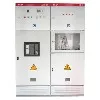
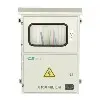
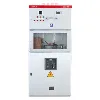
The main faults of the combiner box include DC combiner box failure and AC combiner box failure, as well as data acquisition failure. The following is an introduction to the common faults of the combiner box:
Failure of the DC combiner box. Including battery cell faults (such as open circuit, voltage unbalance, large resistance, battery aging damage, etc.), combiner box output voltage abnormality (such as DC measurement unit damage, output bit voltage abnormality, etc.), temperature detection faults (such as temperature sensor aging damage, virtual wiring, extremely large error, etc.). External faults, such as disconnected connectors or water ingress, as well as internal faults, such as faulty submodules, aging insulation, excessive temperatures. There are also poor contacts, burn marks, cable damage, etc.
Failure of the AC combiner box. Including power supply failures (such as power supply aging, damage, input voltage instability, etc.), remote communication abnormalities (such as communication module failure, interface damage, communication protocol abnormalities, etc.), backflow protection triggering (such as inverter failure, grid-connected voltage abnormality). There are also booster faults (such as internal damage to the inductor coil, insulating oil leakage, etc.), circuit breaker faults (such as solder joint blowing, contact deformation, poor sealing, etc.), and discharger faults (such as poor contact, short circuit of the line, insulation damage, etc.).