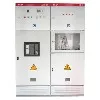
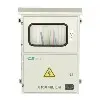
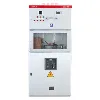
Circuit breaker is a device that is often in contact with electricians, and circuit breaker refers to a switchgear that can close, carry and break the current under normal loop conditions, and can close, carry and break the current under abnormal loop conditions within a specified time. Circuit breakers are divided into high-voltage circuit breakers and low-voltage circuit breakers according to their scope of use, and the division of high and low voltage boundaries is relatively blurred, and generally more than 3kV is called high-voltage electrical appliances. The circuit breaker can be used to distribute electric energy, start the asynchronous motor infrequently, protect the power supply line and the motor, and automatically cut off the circuit when they have serious overload or short circuit and undervoltage and other faults, and its function is equivalent to the combination of fuse switch and over/underheat relay. In addition, it is generally not necessary to change the parts after the fault current is switched off. At present, it has been widely used.
In the process of practical application, it is very important to choose the right circuit breaker, so first of all, we must understand the nature of the circuit breaker parameters and the main indicators of the technical parameters of the circuit breaker, such as the difference between the two parameters of frame current and rated current, these two parameters must be thoroughly understood, it is an important parameter when selecting the circuit breaker, if the choice is wrong, it may cause electrical accidents.
Frame current is an important parameter in the selection of circuit breakers, which refers to the maximum rated current that the main contact of the circuit breaker is allowed to pass through. Also known as rated uninterruptible current.
The rated current refers to the current value that the electrical appliance bears when the temperature rise of each component does not exceed the specified limit value under the specified working system under the specified conditions.
For example, circuit breaker CM1-100, different types of circuit breakers have rated current (10), 16, 25, 32, 40, 50, 63, 80, 100, but their frame current is 100.
The characteristics of the circuit breaker mainly include: rated voltage Ue, rated current In, tripping current setting range of overload protection (Ir or Irth) and short-circuit protection (Im), rated short-circuit breaking current (industrial circuit breaker Icu; household circuit breaker Icn) and so on.
Rated Operating Voltage (Ue): This is the voltage at which the circuit breaker operates under normal (uninterrupted) conditions.
Rated Current (In): This is the maximum current that a circuit breaker equipped with a special overcurrent trip relay can withstand infinitely at the ambient temperature specified by the manufacturer, and will not exceed the temperature limit specified by the current acceptance component.
Short-circuit relay tripping current setting value (Im): Short-circuit tripping relay (instantaneous or short-delay) is used to make the circuit breaker trip quickly when high fault current value occurs, and its trip limit is Im.