

Hey there! As a circuit breaker supplier, I've gotten tons of questions about circuit breakers over the years. One question that pops up quite often is, "What is the function of a circuit breaker's auxiliary contacts?" Well, I'm here to break it down for you in plain English.
First off, let's quickly go over what a circuit breaker is. A circuit breaker is a safety device that automatically interrupts an electrical circuit to prevent damage from overcurrent, such as short - circuits or overloads. It's like a guard for your electrical system, stepping in when things get out of hand.
Now, onto the auxiliary contacts. Auxiliary contacts are additional contacts in a circuit breaker that operate in synchronization with the main contacts. They don't carry the main circuit current; instead, they serve several important functions.
Signaling and Monitoring
One of the primary functions of auxiliary contacts is signaling. They can be used to send a signal to other devices in the electrical system to indicate the status of the circuit breaker. For example, if the circuit breaker trips, the auxiliary contacts can close or open a secondary circuit. This secondary circuit can then trigger an alarm, light up an indicator on a control panel, or send a notification to a monitoring system. This is super useful for operators to quickly know if there's an issue in the electrical system.
Let's say you're running a large industrial facility. You have hundreds of circuit breakers spread across the building. With auxiliary contacts, you can have a central monitoring system that shows the status of each breaker at a glance. If a breaker trips in a remote corner of the facility, you'll be notified right away, allowing you to take immediate action.
Control and Automation
Auxiliary contacts also play a crucial role in control and automation. They can be used to control other electrical devices based on the state of the circuit breaker. For instance, in a motor control circuit, the auxiliary contacts can be used to start or stop a motor when the circuit breaker operates.
In an automated manufacturing process, multiple machines are often interlinked. The auxiliary contacts of a circuit breaker can be used to coordinate the operation of these machines. When one circuit breaker trips, the auxiliary contacts can send a signal to other machines to shut down safely, preventing further damage or accidents.
Lockout and Interlocking
Another important function is lockout and interlocking. Auxiliary contacts can be used to implement safety interlocks in an electrical system. For example, in a high - voltage switchgear, you might want to ensure that a certain door cannot be opened while the circuit breaker is energized. The auxiliary contacts can be used to interlock the door mechanism with the state of the circuit breaker. When the breaker is on, the contacts keep the door locked. Only when the breaker is off can the door be opened safely.
This is a critical safety feature, especially in environments where there's a risk of electrical shock or arc flash. By using auxiliary contacts for interlocking, you can prevent unauthorized access to live electrical equipment.
Types of Auxiliary Contacts
There are two main types of auxiliary contacts: normally open (NO) and normally closed (NC). Normally open contacts are open when the circuit breaker is in its normal, non - tripped state. When the breaker trips, these contacts close, completing a secondary circuit. Normally closed contacts, on the other hand, are closed in the normal state and open when the breaker trips.
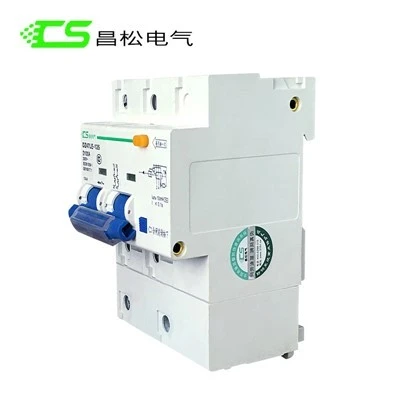

The choice between NO and NC contacts depends on the specific application. For example, if you want to trigger an alarm when the breaker trips, you might use a normally open contact. When the breaker trips, the contact closes, and the alarm circuit is completed.
Applications in Different Industries
The functions of auxiliary contacts make them useful in a wide range of industries. In the power generation industry, circuit breakers with auxiliary contacts are used to protect generators and transmission lines. The auxiliary contacts help in monitoring the status of the breakers and coordinating the operation of the power grid.
In the manufacturing industry, as I mentioned earlier, auxiliary contacts are used for machine control and safety interlocking. They ensure the smooth and safe operation of production lines.
In the renewable energy sector, such as solar power plants, Solar Breakers with auxiliary contacts are crucial. These contacts can be used to monitor the performance of the solar panels and protect the electrical system from faults.
Our Product Offerings
As a circuit breaker supplier, we offer a wide range of circuit breakers with high - quality auxiliary contacts. Our 30 Amp Ac Breaker is a popular choice for many small to medium - sized electrical applications. It comes with reliable auxiliary contacts that can be used for signaling, control, and interlocking.
We also have Rcbo Circuit Breaker which combines the functions of a residual current device and a circuit breaker. The auxiliary contacts on these breakers add an extra layer of safety and control to your electrical system.
Why Choose Our Circuit Breakers?
Our circuit breakers are designed and manufactured to the highest standards. We use top - quality materials and advanced manufacturing processes to ensure the reliability and durability of our products. The auxiliary contacts on our breakers are carefully calibrated to operate accurately and consistently, even in harsh environments.
We also offer excellent customer support. Our team of experts is always ready to help you choose the right circuit breaker for your specific application. Whether you're a small business owner or a large industrial operator, we have the solution for you.
Contact Us for Procurement
If you're in the market for circuit breakers with reliable auxiliary contacts, we'd love to hear from you. We can provide you with detailed product information, pricing, and technical support. Just reach out to us, and we'll work with you to find the best solution for your electrical needs. Don't hesitate to start a conversation with us about your procurement requirements. We're looking forward to partnering with you!
References
- Electrical Engineering Handbook, Third Edition, edited by Richard C. Dorf
- Understanding Circuit Breakers, by the Electric Power Research Institute


