

Hey there! As a circuit breaker supplier, I often get asked about the difference between fixed - trip and adjustable - trip circuit breakers. So, I thought I'd take some time to break it down for you all.
Let's start with the basics. A circuit breaker is an essential device in any electrical system. Its main job is to protect the circuit from damage caused by overcurrent, short - circuit, or other electrical faults. When an abnormal current situation occurs, the circuit breaker trips, interrupting the flow of electricity and preventing potential hazards like fires or equipment damage.
Fixed - Trip Circuit Breakers
Fixed - trip circuit breakers are the more traditional type. They come with a pre - set trip current. This means that the breaker is designed to trip at a specific level of current, and this setting can't be changed. For example, if you have a 20 - amp fixed - trip circuit breaker, it will trip when the current flowing through it reaches 20 amps.
One of the biggest advantages of fixed - trip circuit breakers is their simplicity. They are easy to install and use. You don't have to worry about adjusting the trip settings, which makes them a great choice for many standard electrical applications. For instance, in residential buildings, most of the circuit breakers used in the electrical panel are fixed - trip. They are reliable and cost - effective, making them suitable for protecting general lighting, outlets, and small appliances.
Another benefit is their consistency. Since the trip current is fixed, you can be sure that the breaker will trip at the same current level every time. This predictability is crucial in maintaining the safety and stability of the electrical system.
However, fixed - trip circuit breakers also have some limitations. They lack flexibility. If you need to change the trip current for a particular application, you'll have to replace the entire breaker. This can be time - consuming and costly, especially in industrial or commercial settings where the electrical requirements may change over time.

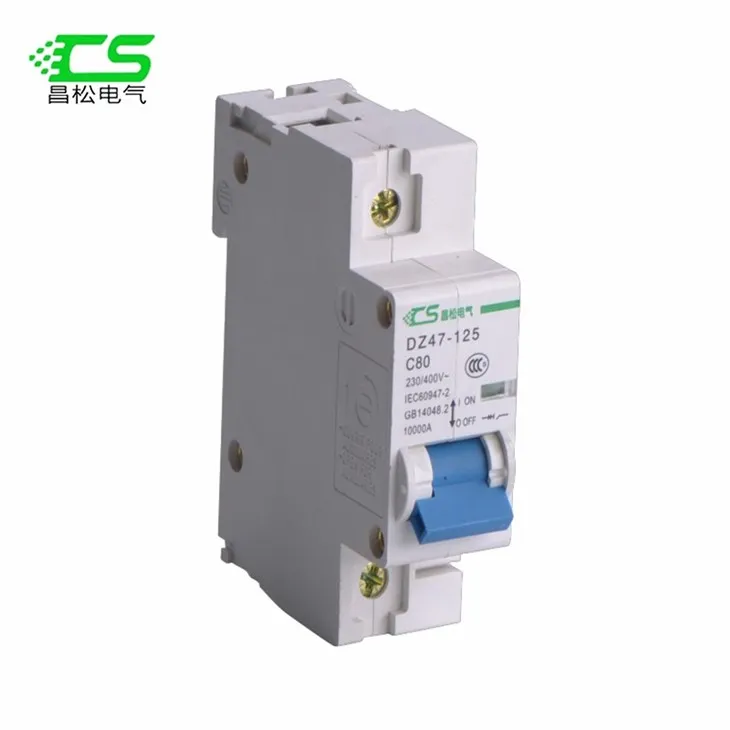
Adjustable - Trip Circuit Breakers
On the other hand, adjustable - trip circuit breakers offer more flexibility. These breakers allow you to adjust the trip current within a certain range. For example, an adjustable - trip breaker might have a range from 10 amps to 50 amps, and you can set the trip current according to your specific needs.
This flexibility makes adjustable - trip circuit breakers ideal for applications where the electrical load may vary. In industrial facilities, different machines and equipment may have different current requirements. With an adjustable - trip breaker, you can easily adjust the trip setting to match the load of each piece of equipment. This not only improves the efficiency of the electrical system but also reduces the risk of false tripping.
Adjustable - trip breakers also offer better protection in some cases. You can fine - tune the trip settings to account for factors like inrush current. Inrush current is a temporary surge of current that occurs when a device is first turned on. By adjusting the trip setting to tolerate the inrush current without tripping, you can ensure that the breaker only trips when there is a real fault.
But, adjustable - trip circuit breakers aren't without their drawbacks. They are generally more expensive than fixed - trip breakers. The additional components and technology required to allow for adjustment increase the cost of production. Also, they are more complex to install and operate. You need to have a good understanding of the electrical system and the proper trip settings to use them effectively. Incorrect adjustment can lead to false tripping or, even worse, failure to trip when a fault occurs.
Real - World Applications
Let's look at some real - world applications to better understand the difference between these two types of circuit breakers.
In a small office building, fixed - trip circuit breakers are often used for the lighting and general power outlets. These circuits have relatively stable loads, and the pre - set trip current of fixed - trip breakers is sufficient to protect them. However, in the server room, where the power consumption can vary depending on the number of servers running, an adjustable - trip breaker might be a better choice. It can be adjusted to handle the different load levels and provide more reliable protection.
In an industrial manufacturing plant, adjustable - trip circuit breakers are commonly used for large motors and heavy - duty equipment. These machines have high inrush currents and variable operating loads. The ability to adjust the trip settings allows for precise protection and efficient operation. Meanwhile, fixed - trip breakers can still be used for less critical circuits, such as the lighting in the break room or the ventilation fans.
Related Products
If you're interested in other electrical products related to circuit breakers, we also offer some great options. For example, the Double Throw Momentary Switch is a useful device for controlling the flow of electricity in a circuit. It can be used in combination with circuit breakers to provide more complex switching functions.
The Pv Grid - Connected Cabinet is another important product in the field of renewable energy. It helps to connect photovoltaic systems to the grid safely and efficiently. And if you need a high - capacity DC breaker, our 125 Amp Dc Breaker is a reliable choice.
Conclusion
In conclusion, both fixed - trip and adjustable - trip circuit breakers have their own advantages and disadvantages. The choice between them depends on your specific electrical requirements. If you need a simple, cost - effective solution for standard applications, fixed - trip circuit breakers are a great option. But if you require flexibility and precise protection for variable loads, adjustable - trip circuit breakers are the way to go.
If you're in the market for circuit breakers or any of the related products I mentioned, don't hesitate to contact us. We're here to help you find the right solution for your electrical needs. Whether you're a homeowner, a business owner, or an industrial operator, we have the expertise and products to meet your requirements. Let's have a chat about your project and see how we can work together to ensure the safety and efficiency of your electrical system.
References
- Electrical Engineering Handbook, various editions
- National Electrical Code (NEC) standards
- Manufacturer's documentation for circuit breakers and related products


