

Hey there! As a supplier of DC MCCBs (Direct Current Molded Case Circuit Breakers), I often get asked about the coordination between a DC MCCB and a contactor. So, I thought I'd take a moment to break it down for you in a way that's easy to understand.
First off, let's talk about what each of these components does. A DC MCCB is a protective device that's designed to automatically disconnect an electrical circuit when it detects an overcurrent, short circuit, or other fault conditions. It's like a safety net for your electrical system, preventing damage to equipment and reducing the risk of electrical fires. On the other hand, a contactor is an electrically controlled switch that's used to connect or disconnect an electrical circuit. It's commonly used in applications where you need to control the flow of power to a load, such as motors, heaters, and lighting systems.
So, why do we need to coordinate these two components? Well, the main reason is to ensure that the electrical system operates safely and efficiently. When a fault occurs in the circuit, the DC MCCB needs to trip quickly to protect the equipment and prevent further damage. However, if the contactor is still closed when the MCCB trips, it can cause arcing and other problems. That's why we need to make sure that the contactor opens before the MCCB trips.
There are a few different ways to achieve this coordination. One common method is to use a time-delay feature on the MCCB. This allows the contactor to open before the MCCB trips, giving it enough time to break the circuit without causing arcing. Another method is to use a control circuit that's designed to open the contactor when a fault is detected. This can be done using a relay or other control device.
Let's take a closer look at how these two components work together in a typical electrical system. Imagine you have a motor that's being controlled by a contactor. The contactor is connected to the power supply through a DC MCCB. When you turn on the motor, the contactor closes, allowing power to flow to the motor. If a fault occurs in the circuit, such as a short circuit or an overcurrent, the DC MCCB will detect it and trip, disconnecting the power supply. However, if the contactor is still closed when the MCCB trips, it can cause arcing and other problems. To prevent this, we can use a time-delay feature on the MCCB or a control circuit to open the contactor before the MCCB trips.
Now, let's talk about some of the factors that you need to consider when coordinating a DC MCCB and a contactor. One of the most important factors is the rated current of the MCCB and the contactor. You need to make sure that the rated current of the MCCB is higher than the rated current of the contactor. This ensures that the MCCB can handle the load without tripping under normal operating conditions. Another factor to consider is the time-delay settings of the MCCB. You need to make sure that the time-delay settings are appropriate for the application. If the time-delay is too short, the contactor may not have enough time to open before the MCCB trips. If the time-delay is too long, it can cause unnecessary downtime and damage to the equipment.
In addition to these factors, you also need to consider the type of load that you're controlling. Different types of loads have different electrical characteristics, which can affect the coordination between the MCCB and the contactor. For example, inductive loads, such as motors, can cause a high inrush current when they're started. This can cause the MCCB to trip if it's not properly coordinated with the contactor. That's why it's important to choose the right type of MCCB and contactor for the application.
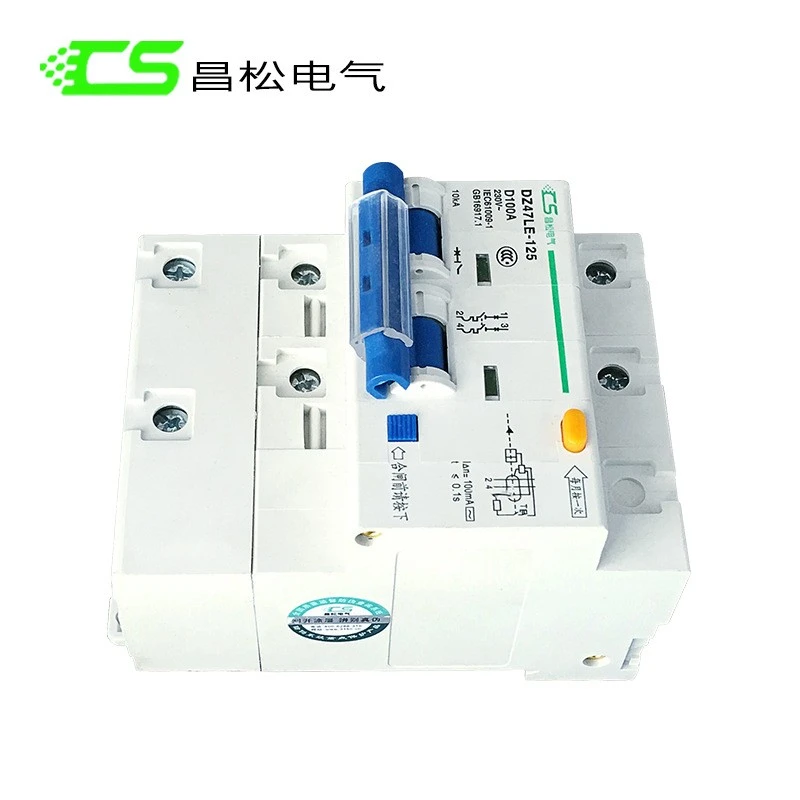
As a DC MCCB supplier, I offer a wide range of products that are designed to work with contactors and other electrical components. Our PicoFuse Pivot is a high-performance DC MCCB that's suitable for a variety of applications. It features a compact design, high breaking capacity, and adjustable trip settings, making it easy to coordinate with contactors and other control devices. We also offer Leakage Circuit Breaker With Overcurrent Function and Residual Current Circuit Breaker With Overcurrent Protection, which provide additional protection against electrical faults.
If you're looking for a reliable and efficient way to coordinate a DC MCCB and a contactor, I'd be happy to help. Our team of experts can provide you with the technical support and advice you need to choose the right products for your application. We can also help you with the installation and commissioning of the equipment to ensure that it operates safely and efficiently.

In conclusion, the coordination between a DC MCCB and a contactor is essential for the safe and efficient operation of an electrical system. By choosing the right products and following the proper installation and commissioning procedures, you can ensure that your electrical system operates without any problems. If you have any questions or need more information, please don't hesitate to contact us. We're here to help you find the best solution for your needs.
References
- Electrical Power Systems: Design and Analysis, by Turan Gonen
- Industrial Control Technology, by Paul M. Fitzerald


