

When it comes to electrical safety and circuit protection, AC MCBs (Alternating Current Miniature Circuit Breakers) play a crucial role. As an AC MCB supplier, I have witnessed firsthand the diverse needs of customers and the wide range of AC MCB models available in the market. In this blog, I will delve into the differences between various models of AC MCBs, helping you understand which one is best suited for your specific requirements.
Breaking Capacity
One of the most significant differences between different AC MCB models is their breaking capacity. Breaking capacity refers to the maximum short - circuit current that an MCB can safely interrupt without being damaged. Higher breaking capacity is essential in areas where there is a higher risk of short - circuits, such as industrial settings or large commercial buildings.
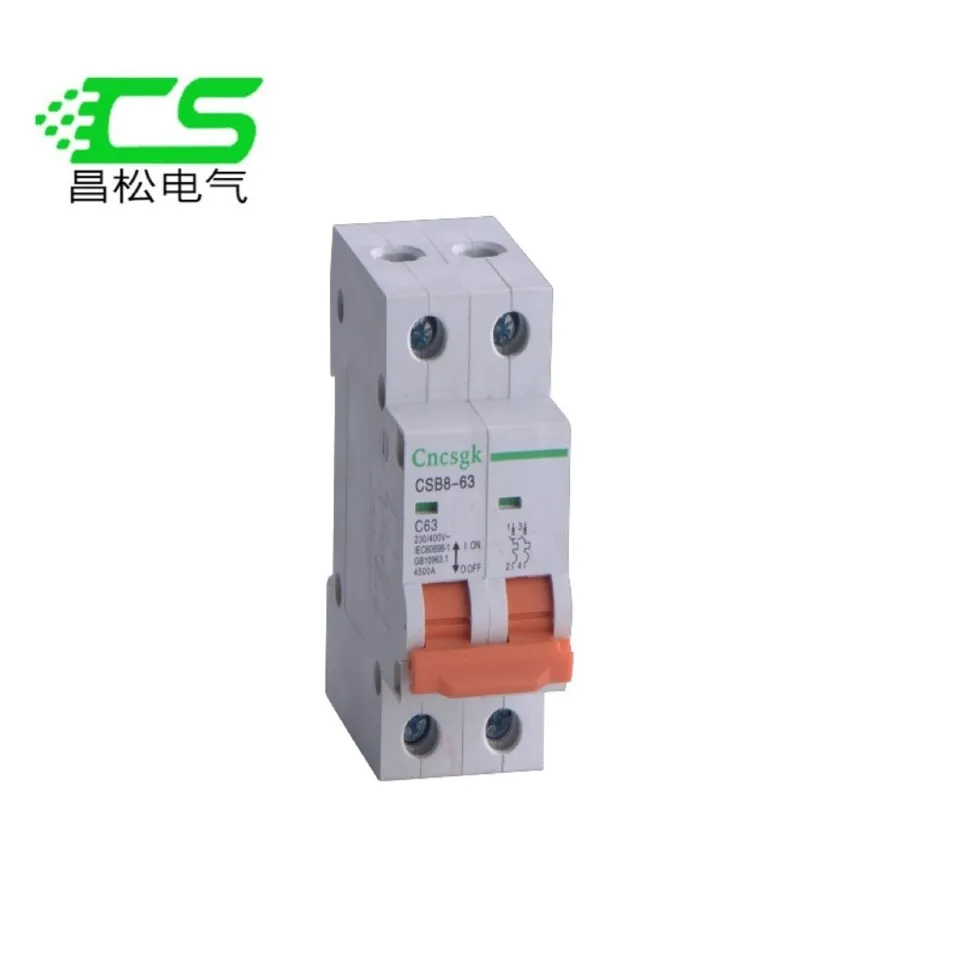

For example, some basic domestic AC MCBs may have a breaking capacity of around 6kA (kiloamperes). These are suitable for typical household electrical circuits where the likelihood of a large short - circuit current is relatively low. On the other hand, industrial - grade AC MCBs can have breaking capacities of 10kA, 16kA, or even higher. If you are dealing with a large electrical load or a complex electrical system, a higher breaking capacity MCB, like those with 16kA or more, will provide better protection. You can check out our Mcb 1p 16a for a reliable option with a decent breaking capacity.
Pole Configuration
AC MCBs come in different pole configurations, including single - pole (1P), double - pole (2P), three - pole (3P), and four - pole (4P). The pole configuration determines how many electrical conductors the MCB can control and protect.
- Single - Pole (1P): A single - pole MCB is used to protect a single phase or line conductor. It is commonly used in domestic lighting circuits or small single - phase appliances. It is cost - effective and suitable for simple electrical circuits.
- Double - Pole (2P): A 2P MCB is used to protect both the phase and the neutral conductors simultaneously. This is often used in circuits where the neutral conductor needs to be disconnected along with the phase for safety reasons, such as in some domestic socket circuits or small single - phase electrical equipment.
- Three - Pole (3P): Three - pole MCBs are used in three - phase electrical systems. They can control and protect all three phase conductors in a three - phase circuit. This is common in industrial and commercial three - phase motors, large electrical appliances, and other three - phase loads.
- Four - Pole (4P): A 4P MCB is used in three - phase systems with a neutral conductor. It can protect all three phase conductors and the neutral conductor. This is useful in applications where a complete isolation of all conductors, including the neutral, is required for safety and maintenance purposes.
Trip Characteristics
The trip characteristics of an AC MCB define how quickly the MCB will trip (open the circuit) in response to an over - current or short - circuit condition. There are mainly three types of trip characteristics: B, C, and D.
- Type B: Type B MCBs are designed to trip when the current exceeds the rated current by 3 - 5 times. They are typically used in circuits where there is a low inrush current, such as in domestic lighting circuits or circuits with resistive loads like heaters. The relatively low trip threshold ensures that small over - currents are quickly detected and the circuit is protected.
- Type C: Type C MCBs trip when the current exceeds the rated current by 5 - 10 times. They are commonly used in circuits with inductive loads, such as motors or transformers. Inductive loads often have a higher inrush current when they start up, and the Type C trip characteristic allows for this temporary increase in current without false tripping.
- Type D: Type D MCBs trip when the current exceeds the rated current by 10 - 50 times. They are used in circuits with high inrush currents, such as in some industrial equipment or large transformers. The high trip threshold is necessary to prevent the MCB from tripping during normal start - up of these high - inrush load devices.
Rated Current
The rated current of an AC MCB is another important factor that varies between models. The rated current is the maximum continuous current that the MCB can carry without tripping under normal operating conditions.
AC MCBs are available in a wide range of rated currents, from a few amperes to several hundred amperes. For domestic applications, common rated currents include 6A, 10A, 16A, and 20A. These are used for different types of circuits, such as lighting circuits (usually 6A or 10A) and socket circuits (16A or 20A). In industrial and commercial settings, higher rated current MCBs, such as 50A, 100A, or more, are used to handle large electrical loads.
Protection Features
Some advanced AC MCB models come with additional protection features.
- Over - Temperature Protection: This feature ensures that the MCB trips if the temperature of the MCB itself exceeds a certain limit. This can prevent damage to the MCB due to overheating, which may be caused by high ambient temperatures or excessive current flow.
- Short - Circuit Protection: All AC MCBs are designed to provide short - circuit protection. However, the speed and effectiveness of short - circuit protection can vary between models. Some high - quality MCBs are equipped with advanced magnetic tripping mechanisms that can quickly detect and interrupt short - circuit currents.
- Earth - Leakage Protection: Some AC MCBs are combined with earth - leakage protection, also known as residual current device (RCD) functionality. This can detect small leakage currents to the earth and quickly trip the circuit, providing additional protection against electric shock.
Mechanism and Design
The internal mechanism of an AC MCB can also vary between models. For example, our MiniMelt Mechanism is a unique design that offers reliable and fast tripping. Some MCBs use thermal - magnetic tripping mechanisms, where the thermal part responds to over - current due to long - term overload, and the magnetic part responds to short - circuit currents.
The physical design of the MCB also matters. Some MCBs are designed for easy installation in standard electrical panels, while others may be more suitable for specialized or custom - built electrical enclosures. Additionally, the size and shape of the MCB can affect its compatibility with different electrical systems and installation spaces.
Compatibility with Electrical Systems
Different models of AC MCBs need to be compatible with the electrical system they are installed in. This includes factors such as the voltage rating of the MCB and the type of electrical supply (single - phase or three - phase).
- Voltage Rating: AC MCBs are available in different voltage ratings, such as 230V, 400V, etc. Make sure to choose an MCB with a voltage rating that matches the voltage of your electrical system. Using an MCB with an incorrect voltage rating can lead to improper operation or even damage to the MCB and the electrical system.
- System Type: As mentioned earlier, you need to choose the appropriate pole configuration and other features based on whether your system is single - phase or three - phase.
Application in Power Distribution
AC MCBs are an integral part of power distribution systems. In a smart power distribution cabinet, different types of AC MCBs are used to manage and protect various electrical circuits. Our Smart Power Distribution Cabinet is designed to house multiple AC MCBs and other electrical components, providing a centralized and efficient way to distribute electrical power.
In a domestic power distribution board, different rated and configured AC MCBs are used to protect different circuits, such as lighting, sockets, and appliances. In an industrial power distribution system, a combination of high - breaking - capacity, multi - pole MCBs is used to ensure the safe and reliable operation of large electrical loads.
Conclusion
In conclusion, there are several differences between different models of AC MCBs, including breaking capacity, pole configuration, trip characteristics, rated current, protection features, mechanism and design, and compatibility with electrical systems. Choosing the right AC MCB for your specific application is crucial to ensure the safety and reliability of your electrical system.
If you are in need of high - quality AC MCBs or have any questions about which model is best for your needs, please feel free to contact us for a detailed discussion. We are here to provide you with the best solutions and support for your electrical protection requirements. Let's work together to ensure your electrical systems are well - protected and operating efficiently.
References
- Electrical Installation Guidebooks
- Industry Standards for AC MCBs
- Manufacturer's Technical Documentation for AC MCBs


