

As a supplier of DC MCBs (Direct Current Miniature Circuit Breakers), I've witnessed firsthand the critical role that voltage rating plays in the performance and safety of these essential electrical components. In this blog, I'll delve into how the voltage rating affects a DC MCB, providing insights that can help you make informed decisions when selecting the right product for your applications.
Understanding Voltage Rating in DC MCBs
The voltage rating of a DC MCB is a fundamental specification that indicates the maximum voltage at which the circuit breaker can safely operate. It is a crucial parameter because it directly impacts the MCB's ability to interrupt the flow of electrical current in the event of an overload or short - circuit.
In DC circuits, the voltage rating is closely related to the arc - quenching ability of the MCB. When a fault occurs, an arc is formed as the contacts of the MCB separate. Unlike in AC circuits, where the current naturally crosses zero twice per cycle, DC current flows continuously. This means that extinguishing the arc in a DC circuit is more challenging, and the voltage rating of the MCB determines its effectiveness in this regard.
Impact on Arc - Quenching
A higher voltage rating in a DC MCB generally means better arc - quenching capabilities. When the voltage across the contacts during a fault is high, the arc is more difficult to extinguish. A well - designed MCB with an appropriate voltage rating is equipped with features such as special arc - chute designs and materials that help to cool and extinguish the arc quickly.
For example, in a Distributed Photovoltaic Substation, DC MCBs are used to protect the electrical circuits. The DC voltage in these systems can be relatively high, often in the range of several hundred volts. Using a DC MCB with a voltage rating that is too low for the system can lead to the arc not being extinguished properly. This can result in sustained arcing, which may cause damage to the MCB itself, as well as other components in the circuit, and pose a significant safety hazard.
Safety Considerations
Safety is of utmost importance when it comes to electrical systems. The voltage rating of a DC MCB is directly linked to the safety of the entire installation. If a DC MCB is used in a circuit where the operating voltage exceeds its rated voltage, there is a high risk of electrical breakdown. This can lead to overheating, fire, and even electric shock.

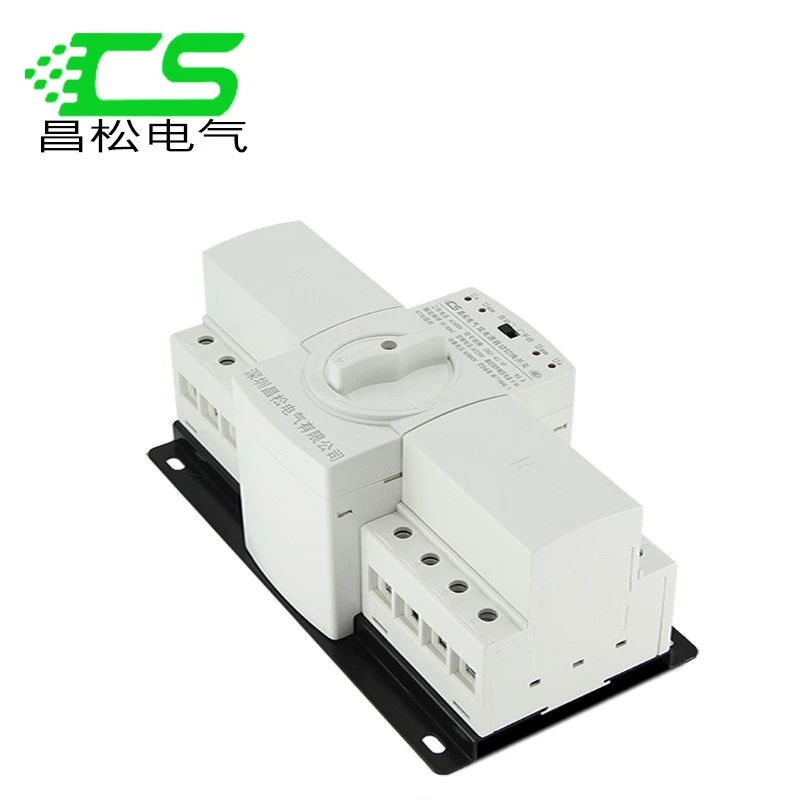
When selecting a DC MCB, it is essential to ensure that its voltage rating is equal to or higher than the maximum voltage that the circuit is expected to experience. This provides a safety margin and helps to prevent dangerous situations. For instance, in a battery - powered system, the voltage of the battery can vary depending on its state of charge. A DC MCB with an appropriate voltage rating will be able to handle these voltage fluctuations safely.
Compatibility with Electrical Systems
The voltage rating of a DC MCB also affects its compatibility with different types of electrical systems. Different applications have different voltage requirements. For example, in some small - scale DC power supplies, the voltage may be as low as 12V or 24V. In contrast, industrial DC systems or large - scale renewable energy installations may operate at much higher voltages, such as 400V or even higher.
Using a DC MCB with an incorrect voltage rating can lead to improper operation of the electrical system. If the voltage rating is too high, the MCB may be over - engineered for the application, resulting in unnecessary cost. On the other hand, if the voltage rating is too low, the MCB may not be able to protect the circuit effectively.
Performance and Reliability
The voltage rating has a significant impact on the performance and reliability of a DC MCB. A DC MCB that is operating within its rated voltage range is more likely to function correctly and consistently over time. It will be able to interrupt the current quickly and reliably during a fault, protecting the electrical system from damage.
In contrast, a DC MCB that is subjected to voltages above its rated value may experience premature wear and tear. The high - voltage stress can cause the contacts to erode more quickly, and the arc - quenching mechanism may become less effective. This can lead to a decrease in the overall reliability of the MCB and increase the likelihood of system failures.
Bi - power Switch Mechanism and DC MCBs
In some applications, a Bi - power Switch Mechanism may be used in conjunction with DC MCBs. The voltage rating of the DC MCB is an important factor to consider when integrating it with such a mechanism. The bi - power switch mechanism is designed to switch between different power sources, and the DC MCB needs to be able to handle the voltage levels associated with these sources.
If the voltage rating of the DC MCB is not compatible with the bi - power switch mechanism, it can lead to improper switching and potential damage to the electrical system. For example, if the MCB cannot handle the voltage surge that occurs during the switching process, it may fail to interrupt the current, resulting in a short - circuit or other electrical problems.
Combined Systems Enclosure and DC MCBs
In a Combined Systems Enclosure, multiple electrical components, including DC MCBs, are housed together. The voltage rating of the DC MCB is crucial for the overall safety and performance of the combined system.
The enclosure provides protection for the components, but if the DC MCB has an incorrect voltage rating, it can still pose a risk. For example, if a high - voltage fault occurs in one part of the system and the DC MCB cannot handle the voltage, the fault may spread to other components within the enclosure, causing extensive damage.
Selecting the Right Voltage Rating
When selecting a DC MCB, it is essential to consider the specific requirements of the electrical system. Here are some steps to help you choose the right voltage rating:
- Determine the maximum voltage: Identify the maximum voltage that the circuit is expected to experience. This may involve considering factors such as the power source, the type of load, and any potential voltage fluctuations.
- Consider the safety margin: It is advisable to select a DC MCB with a voltage rating that is higher than the maximum voltage of the circuit. A safety margin of at least 10 - 20% is often recommended.
- Consult with an expert: If you are unsure about the appropriate voltage rating for your application, it is a good idea to consult with an electrical engineer or an expert in the field. They can provide valuable insights based on their experience and knowledge.
Conclusion
The voltage rating of a DC MCB is a critical factor that affects its performance, safety, compatibility, and reliability. As a supplier of DC MCBs, I understand the importance of providing products with the right voltage ratings for different applications.
Whether you are working on a small - scale DC power supply or a large - scale industrial or renewable energy project, selecting the appropriate DC MCB with the correct voltage rating is essential. It ensures the safe and efficient operation of your electrical system and helps to prevent costly damage and downtime.
If you are in the market for high - quality DC MCBs and need assistance in selecting the right voltage rating for your application, please feel free to contact us for a detailed discussion and procurement negotiation. We are committed to providing you with the best solutions to meet your electrical protection needs.
References
- IEEE Standards for Electrical Safety in Low - Voltage DC Systems
- IEC Publications on Miniature Circuit Breakers for DC Applications
- Manufacturer's Technical Documentation on DC MCBs


