

As a circuit breaker supplier, I've witnessed firsthand the critical role these devices play in electrical systems. One factor that significantly impacts the performance of circuit breakers is altitude. In this blog post, I'll delve into how altitude affects circuit breaker performance, drawing on my experience in the industry and the latest scientific knowledge.
1. Basic Principles of Circuit Breakers
Before discussing the impact of altitude, it's essential to understand the basic principles of circuit breakers. Circuit breakers are designed to protect electrical circuits from damage caused by overcurrent, short - circuits, and other electrical faults. They work by interrupting the flow of electrical current when a fault is detected.
The two main types of circuit breakers are thermal - magnetic and electronic. Thermal - magnetic circuit breakers use a bimetallic strip to detect overcurrent and an electromagnet to detect short - circuits. Electronic circuit breakers, on the other hand, use electronic sensors and microprocessors to monitor and control the current flow.
2. How Altitude Affects Air Density
Altitude has a direct impact on air density. As altitude increases, air density decreases. This is because the atmosphere becomes thinner at higher altitudes. The relationship between altitude and air density can be described by the barometric formula:
[P = P_0e^{-\frac{Mgh}{RT}}]
where (P) is the pressure at altitude (h), (P_0) is the pressure at sea - level, (M) is the molar mass of air, (g) is the acceleration due to gravity, (R) is the universal gas constant, and (T) is the temperature.
Since air density (\rho) is proportional to pressure ((\rho=\frac{PM}{RT})), a decrease in pressure at higher altitudes leads to a decrease in air density.
3. Impact of Altitude on Arc Extinction
One of the most critical functions of a circuit breaker is arc extinction. When a circuit breaker interrupts the current, an arc is formed between the contacts. The arc is a high - temperature, high - energy plasma that can cause damage to the contacts and other components of the circuit breaker if not extinguished quickly.
Air is commonly used as an arc - quenching medium in many circuit breakers. At higher altitudes, the lower air density affects the arc - extinction process in several ways:
- Reduced Dielectric Strength: The dielectric strength of air is the maximum electric field that air can withstand without breaking down. As air density decreases with altitude, the dielectric strength of air also decreases. This means that at higher altitudes, the arc is more likely to reignite after being interrupted, which can lead to longer arcing times and more severe damage to the circuit breaker contacts.
- Increased Arc Resistance: The resistance of an arc is related to the density of the arc - quenching medium. With lower air density at higher altitudes, the arc resistance decreases, which can result in a higher arc current and more energy being dissipated in the arc.
4. Impact of Altitude on Heat Dissipation
Circuit breakers generate heat during normal operation, especially when carrying high currents. Effective heat dissipation is crucial to ensure the proper functioning and longevity of circuit breakers.
Air is also an important medium for heat dissipation in many circuit breakers. At higher altitudes, the lower air density reduces the convective heat transfer coefficient. Convection is the process by which heat is transferred from a hot surface to the surrounding air through the movement of the air. With less dense air at higher altitudes, there are fewer air molecules available to carry away the heat, resulting in less efficient heat dissipation.
This can cause the temperature of the circuit breaker to rise, which may lead to premature aging of the insulation materials, reduced performance, and even failure of the circuit breaker.
5. Impact on Other Components
In addition to arc extinction and heat dissipation, altitude can also affect other components of a circuit breaker. For example, the performance of seals and gaskets may be affected by the lower air pressure at higher altitudes. Seals are used to prevent the ingress of dust, moisture, and other contaminants into the circuit breaker. The lower air pressure can cause the seals to expand or contract, which may lead to leaks and reduced protection of the internal components.
Moreover, the performance of electronic components in electronic circuit breakers can also be influenced by altitude. The change in air density and pressure can affect the operation of sensors, microprocessors, and other electronic parts, potentially leading to inaccurate readings and malfunction.
6. Mitigation Strategies
To ensure the reliable performance of circuit breakers at high altitudes, several mitigation strategies can be employed:

- Derating: Circuit breakers can be derated at higher altitudes. Derating means reducing the rated current and voltage of the circuit breaker to compensate for the reduced dielectric strength and heat - dissipation capabilities at high altitudes. Manufacturers usually provide derating curves that show how the rated values of a circuit breaker should be adjusted based on the altitude.
- Using Specialized Arc - Quenching Media: Instead of relying solely on air, circuit breakers can be designed to use other arc - quenching media, such as sulfur hexafluoride ((SF_6)) or vacuum. These media have better arc - extinction properties and are less affected by altitude compared to air.
- Improved Heat - Dissipation Design: Circuit breakers can be designed with enhanced heat - dissipation features, such as larger heat sinks, forced - air cooling systems, or liquid - cooling systems. These features can help to improve the heat - dissipation efficiency at high altitudes.
7. Application in High - Altitude Projects
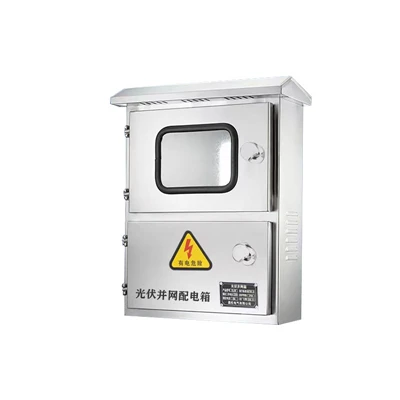
In high - altitude areas, such as mountainous regions or high - altitude power plants, the performance of circuit breakers is of utmost importance. For example, in Photovoltaic Grid-connected Distribution Box, circuit breakers are used to protect the electrical circuits from overcurrent and short - circuits. The reduced performance of circuit breakers at high altitudes can pose a significant risk to the safety and reliability of the photovoltaic system.
Similarly, in Prefabricated Utility Module and Step-up Transformers used in high - altitude power transmission and distribution systems, the proper functioning of circuit breakers is crucial to ensure the stable operation of the entire power grid.
8. Conclusion and Call to Action
In conclusion, altitude has a significant impact on the performance of circuit breakers, affecting arc extinction, heat dissipation, and the performance of other components. As a circuit breaker supplier, we understand the challenges posed by high - altitude environments and are committed to providing high - quality circuit breakers that can operate reliably in such conditions.
If you are involved in a project in a high - altitude area or need circuit breakers with enhanced performance, we invite you to contact us for a detailed discussion. Our team of experts can help you select the most suitable circuit breakers for your specific needs and provide professional advice on installation, operation, and maintenance.
References
- IEEE Standard C37.100.1 - 2018, "IEEE Standard for Definitions for Power Switchgear."
- ANSI/IEEE C37.5 - 2008, "IEEE Standard for Rating Structure for AC High - Voltage Circuit Breakers Rated on a Symmetrical Current Basis."
- EPRI (Electric Power Research Institute) reports on high - altitude power system equipment performance.


