

In the realm of solar power systems, the efficient and safe operation of series - connected solar panel configurations is of utmost importance. A key component that plays a crucial role in ensuring this is the DC MCB (Direct Current Miniature Circuit Breaker) for solar. As a trusted supplier of DC MCBs for solar, I am excited to delve into how these devices work within a series - connected solar panel setup.
Understanding Series - Connected Solar Panel Configurations
Before we explore the role of DC MCBs, it's essential to understand series - connected solar panel configurations. When solar panels are connected in series, the positive terminal of one panel is linked to the negative terminal of the next panel. This configuration has the effect of increasing the overall voltage output of the solar array while keeping the current relatively constant. For example, if each solar panel in a series connection produces 20 volts and 5 amps, a series connection of three such panels will result in an output of 60 volts and 5 amps.
The advantage of series - connected solar panels is that it can generate a higher voltage, which is beneficial for long - distance power transmission and for matching the input requirements of inverters. However, this configuration also presents some challenges. If one panel in the series is shaded, damaged, or malfunctioning, it can significantly reduce the power output of the entire array due to the so - called "Christmas - light effect." In such a situation, the current flow through the series is restricted, and the overall performance of the solar system is compromised.
The Role of DC MCBs in Series - Connected Solar Panel Configurations
DC MCBs are designed to protect the solar power system from over - current, short - circuit, and other electrical faults. In a series - connected solar panel configuration, they serve as a safety mechanism that can isolate faulty sections of the circuit, preventing damage to the panels, inverters, and other components.
Over - Current Protection
Over - current can occur in a series - connected solar panel system due to various reasons. For instance, if there is a short - circuit in one of the panels or a fault in the wiring, the current flowing through the circuit can increase significantly. A DC MCB for solar is equipped with a thermal - magnetic trip unit. The thermal part of the trip unit responds to long - term over - currents. When the current exceeds the rated value of the MCB for an extended period, the bimetallic strip inside the MCB heats up and bends, causing the breaker to trip.
The magnetic part of the trip unit, on the other hand, responds to short - circuit currents. Short - circuit currents are extremely high and can cause severe damage to the solar system in a very short time. When a short - circuit occurs, the magnetic field generated by the high - current flow activates the solenoid in the MCB, which quickly trips the breaker, interrupting the circuit and protecting the system.
Isolation of Faulty Panels
In a series - connected solar panel array, if one panel develops a fault, the DC MCB can isolate that panel from the rest of the circuit. This is crucial because, as mentioned earlier, a faulty panel in a series connection can drag down the performance of the entire array. By tripping the MCB associated with the faulty panel, the remaining panels can continue to operate normally, minimizing the impact on the overall power output of the solar system.
How DC MCBs are Integrated into Series - Connected Solar Panel Systems
The installation of DC MCBs in a series - connected solar panel system is a straightforward process, but it requires careful planning and adherence to safety standards.
Placement
DC MCBs are typically installed in the PV combiner box. A 6in 1out PV Combiner Box DC is a common type of combiner box used in solar power systems. It allows multiple series - connected solar panels to be combined into a single output. The DC MCBs are installed at the input or output of the combiner box, depending on the specific design requirements of the system.
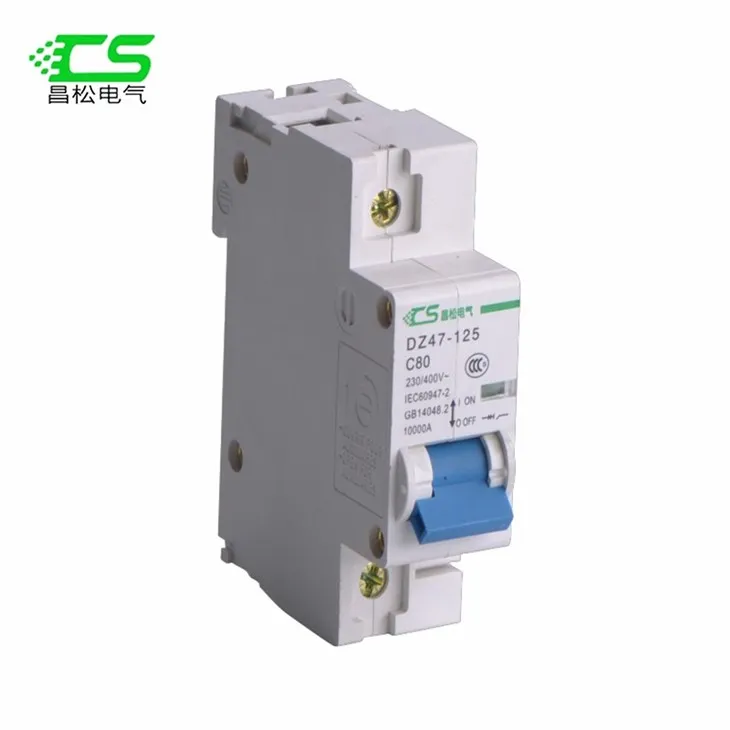

When placed at the input of the combiner box, each MCB protects an individual series string of solar panels. This setup allows for precise isolation of faulty strings. If a fault occurs in one series string, only the corresponding MCB will trip, leaving the other strings unaffected. On the other hand, when the MCBs are placed at the output of the combiner box, they protect the entire combined output of the solar panels. This configuration is useful for providing overall protection to the system against over - current and short - circuit faults.
Wiring
Proper wiring is essential for the correct operation of DC MCBs in a series - connected solar panel system. The wires used should have the appropriate cross - sectional area to handle the rated current of the MCB and the solar panels. The connections between the MCBs, solar panels, and other components should be secure and free from any loose connections or exposed conductors.
It's also important to follow the wiring diagrams provided by the MCB manufacturer and the solar system designer. Incorrect wiring can lead to improper operation of the MCBs, which may result in system failures or safety hazards.
Compatibility with Other Solar System Components
DC MCBs for solar need to be compatible with other components in the series - connected solar panel system, such as inverters and high - voltage preinstalled substations.
Inverters
Inverters are responsible for converting the DC power generated by the solar panels into AC power for use in homes, businesses, or the grid. The DC MCBs should be selected based on the input requirements of the inverter. The rated current and voltage of the MCB should match the specifications of the inverter to ensure smooth and efficient power transfer.
High Voltage Preinstalled Substation
In large - scale solar power plants, high - voltage preinstalled substations are used to step up the voltage of the generated power for long - distance transmission. DC MCBs play a role in protecting the substation and the associated equipment from electrical faults. They need to be able to handle the high - voltage and high - current conditions present in these substations.
Choosing the Right DC MCB for a Series - Connected Solar Panel Configuration
When selecting a DC MCB for a series - connected solar panel system, several factors need to be considered.
Rated Current
The rated current of the MCB should be based on the maximum current that the series - connected solar panels can generate. This value can be calculated by considering the short - circuit current (Isc) of the panels and the number of panels in the series. It's important to choose an MCB with a rated current that is slightly higher than the normal operating current of the system to avoid false tripping.
Voltage Rating
The voltage rating of the MCB should be sufficient to handle the maximum voltage output of the series - connected solar panels. In a series - connected configuration, the voltage adds up, so the MCB needs to be able to withstand the total voltage of the array.
Breaking Capacity
The breaking capacity of the MCB refers to its ability to interrupt the circuit under fault conditions. It is measured in kilo - amperes (kA). A higher breaking capacity is required for systems that are more likely to experience high - current short - circuits, such as large - scale solar power plants.
For example, a 125 Amp Dc Breaker may be suitable for a medium - sized series - connected solar panel system with a relatively high current output.
Conclusion
In conclusion, DC MCBs are an essential component in series - connected solar panel configurations. They provide over - current and short - circuit protection, isolate faulty panels, and ensure the safe and efficient operation of the solar power system. As a supplier of DC MCBs for solar, we understand the importance of these devices and offer a wide range of high - quality products that are designed to meet the specific needs of different solar power systems.
If you are in the process of designing or upgrading a series - connected solar panel system, we invite you to contact us for more information about our DC MCBs. Our team of experts can help you choose the right MCBs for your system and provide technical support throughout the installation and operation process. Let's work together to build a more sustainable and reliable solar power future.
References
- "Solar Power Systems Design and Installation Guide," Solar Energy Industries Association.
- "DC Circuit Protection in Photovoltaic Systems," International Electrotechnical Commission (IEC).
- Manufacturer's manuals and technical specifications for DC MCBs, PV combiner boxes, inverters, and high - voltage preinstalled substations.


