

Hey there! As a supplier of 30 amp AC breakers, I've been getting a lot of questions lately about how these little devices protect against short - circuits. So, I thought I'd take a few minutes to break it down for you.
First off, let's talk about what a short - circuit actually is. A short - circuit happens when there's an unintended low - resistance connection between two points in an electrical circuit. This can occur due to a variety of reasons, like damaged insulation on wires, loose connections, or even some kind of physical damage to the electrical system. When a short - circuit occurs, the electrical current can suddenly increase to extremely high levels. And that's where our 30 amp AC breaker comes in.
A 30 amp AC breaker is designed to handle a maximum current of 30 amps under normal operating conditions. The "AC" part stands for alternating current, which is the type of electricity that's commonly used in most household and commercial electrical systems.
So, how does it protect against short - circuits? Well, inside the breaker, there are a couple of key components that work together to detect and respond to abnormal current levels.
One of the main components is the thermal element. This is basically a bimetallic strip. Under normal current conditions, the current flowing through the breaker heats up the bimetallic strip, but only to a certain extent. The strip is designed to bend gradually as it heats up. But when there's a short - circuit, the current shoots up way beyond the 30 - amp limit. This causes the bimetallic strip to heat up much more rapidly and bend quickly. As it bends, it trips a mechanism that opens the contacts inside the breaker, interrupting the flow of electricity.
The other important component is the magnetic element. This is a solenoid. When the current in the circuit increases rapidly, like during a short - circuit, the magnetic field around the solenoid gets really strong. This strong magnetic field pulls a plunger or an armature inside the solenoid. The movement of this plunger also trips the mechanism that opens the contacts in the breaker.
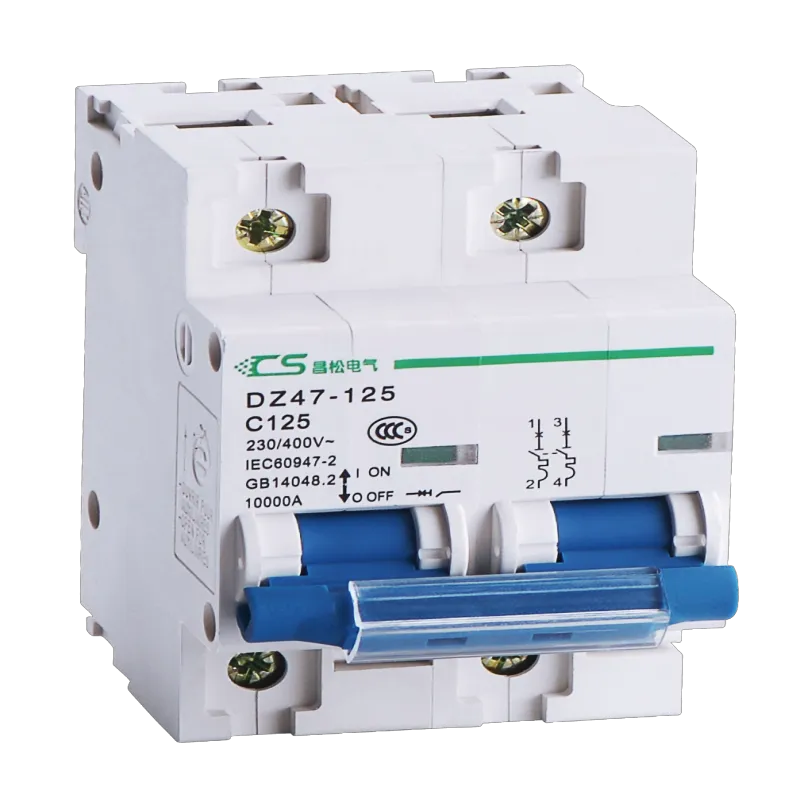

The beauty of having both the thermal and magnetic elements is that they complement each other. The thermal element is great at detecting long - term over - current situations. For example, if there's a small but continuous overload in the circuit, the thermal element will eventually trip the breaker. On the other hand, the magnetic element is super fast at responding to sudden, large increases in current, like those that occur during a short - circuit.
Let's take a closer look at some real - world scenarios. Imagine you have a circuit in your home that's connected to a bunch of appliances. Maybe you have a refrigerator, a microwave, and a few lights all on the same circuit. Under normal circumstances, the total current drawn by these appliances is well within the 30 - amp capacity of the breaker. But let's say there's a problem with the wiring in the refrigerator. A wire might have come loose and touched another wire, creating a short - circuit. In an instant, the current in the circuit will spike. The magnetic element in the breaker will sense this sudden increase and trip the breaker almost immediately, protecting your electrical system from damage.
Now, you might be wondering about the importance of having the right size breaker. A 30 amp breaker is sized for a specific load. If you use a breaker with a higher amp rating than what the circuit is designed for, it won't trip when it should. For example, if you put a 50 - amp breaker on a circuit that's only supposed to handle 30 amps, a short - circuit or an overload might not cause the breaker to trip, and this could lead to overheating of the wires, which is a major fire hazard. On the other hand, if you use a breaker with a lower amp rating, it might trip even under normal operating conditions, which can be really annoying.
When it comes to electrical systems, there are also other related components that you might want to know about. For instance, Step-up Transformers are used to increase the voltage in a circuit. They work on the principle of electromagnetic induction and are often used in power transmission and distribution systems.
Another important component is the Circuit Breaker Mcb. Miniature Circuit Breakers (MCBs) are similar to our 30 amp AC breakers but are usually used for lower - current applications, like in residential electrical panels to protect individual circuits.
And then there's the concept of Picoampere. A picoampere is an extremely small unit of electric current. It's often used in very sensitive electrical measurements, like in scientific research or in some high - tech electronic devices.
As a supplier of 30 amp AC breakers, I can tell you that we take a lot of pride in the quality of our products. Our breakers are rigorously tested to ensure that they meet all the safety standards. We use high - quality materials in the manufacturing process to make sure that the thermal and magnetic elements work as intended. Whether you're a professional electrician working on a large commercial project or a homeowner looking to upgrade your electrical system, our 30 amp AC breakers are a reliable choice.
If you're in the market for 30 amp AC breakers or have any questions about how they work, don't hesitate to reach out. We're always here to help you make the right choice for your electrical needs. Whether it's for a new installation or a replacement, we can provide you with the best - quality breakers at competitive prices.
So, if you're interested in learning more or making a purchase, just drop us a line. We'll be more than happy to discuss your requirements and get you the right 30 amp AC breakers for your project.
References
- Electrical Engineering Handbook, various editions
- National Electrical Code (NEC)
- Manufacturer's documentation on 30 amp AC breakers


