

Can MCCB 250A 3P be used in a battery charging circuit?
As a supplier of MCCB 250A 3P, I often receive inquiries from customers about the suitability of our products in various electrical circuits. One question that comes up frequently is whether the MCCB 250A 3P can be used in a battery charging circuit. In this blog post, I will delve into this topic, analyzing the technical aspects and providing insights based on industry knowledge and experience.
Understanding MCCB 250A 3P
First, let's briefly understand what an MCCB 250A 3P is. MCCB stands for Molded Case Circuit Breaker. It is a type of electrical protection device designed to protect electrical circuits from over - current, short - circuit, and sometimes under - voltage conditions. The "250A" indicates the rated current of the circuit breaker, meaning it can handle a continuous current of up to 250 amperes. The "3P" stands for three - pole, which means it can be used to protect three - phase electrical systems.
Battery Charging Circuits: An Overview
Battery charging circuits are used to replenish the energy stored in batteries. They can vary greatly in complexity and design, depending on the type of battery (such as lead - acid, lithium - ion, etc.), the charging requirements (e.g., constant current, constant voltage), and the application (e.g., automotive, solar power storage).
In general, a battery charging circuit consists of a power source, a charging controller, and the battery itself. The power source can be a solar panel, a generator, or the grid. The charging controller regulates the charging process to ensure the battery is charged safely and efficiently.
Factors to Consider for Using MCCB 250A 3P in Battery Charging Circuits
1. Current Rating
The first and most crucial factor is the current rating. When considering using an MCCB 250A 3P in a battery charging circuit, we need to determine the maximum charging current of the circuit. If the charging current of the battery system is consistently below 250A, the MCCB can be a suitable choice for over - current protection. However, if the charging current occasionally or regularly exceeds 250A, the MCCB may trip frequently, causing disruptions to the charging process.
For example, in a large - scale solar power storage system with multiple high - capacity batteries, the charging current during peak sunlight hours may be very high. If the calculated maximum charging current is, say, 300A, then an MCCB 250A 3P would not be appropriate as it would likely trip under normal operating conditions.
2. Voltage Compatibility
Another important factor is voltage compatibility. The MCCB 250A 3P is designed to work within a specific voltage range. In a battery charging circuit, the voltage can vary depending on the type of battery and the charging stage. For instance, a lead - acid battery typically has a nominal voltage of 12V, 24V, or 48V, while a lithium - ion battery can have different nominal voltages depending on its chemistry.
The MCCB must be able to withstand the maximum voltage that can occur in the battery charging circuit. If the voltage exceeds the rated voltage of the MCCB, it can cause insulation breakdown and potentially lead to a safety hazard.
3. Fault Protection Requirements
Battery charging circuits may be prone to various faults, such as short - circuits and over - currents. The MCCB 250A 3P is capable of providing protection against these faults. In the event of a short - circuit, the MCCB can quickly interrupt the circuit, preventing damage to the battery, the charging controller, and other components in the circuit.
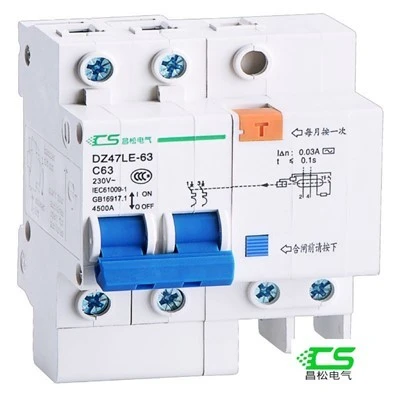
However, different battery charging circuits may have different fault protection requirements. For example, some circuits may require additional protection against ground faults. In such cases, a 3 Phase Rcbo (Residual Current Circuit Breaker with Overcurrent protection) may be more suitable, as it can detect and protect against both over - currents and ground faults.
4. System Configuration
The configuration of the battery charging system also plays a role. In a three - phase battery charging system, the MCCB 250A 3P can be used to protect all three phases simultaneously. This is beneficial as it simplifies the protection scheme and ensures balanced protection across all phases.
On the other hand, in a single - phase battery charging system, a single - pole or two - pole circuit breaker may be more appropriate, as using a three - pole MCCB would be overkill and may increase the cost of the system.
Advantages of Using MCCB 250A 3P in Battery Charging Circuits
1. Robust Over - Current Protection
One of the main advantages of using an MCCB 250A 3P in a battery charging circuit is its ability to provide robust over - current protection. In case of a fault or an abnormal increase in the charging current, the MCCB can quickly trip and disconnect the circuit, preventing damage to the battery and other components.
2. Long - Term Reliability
MCCBs are known for their long - term reliability. They are designed to operate under harsh conditions and can withstand a large number of switching operations. This makes them suitable for use in battery charging circuits, which may be in operation for long periods.
3. Compatibility with Three - Phase Systems
If the battery charging circuit is part of a three - phase electrical system, the MCCB 250A 3P can be easily integrated. It can provide coordinated protection for all three phases, ensuring the safe and efficient operation of the entire system.
Disadvantages and Limitations
1. Cost
MCCBs can be relatively expensive compared to other types of circuit breakers. If the battery charging circuit does not require the high - end features and protection capabilities of an MCCB 250A 3P, using it may increase the overall cost of the system without providing significant additional benefits.
2. Size and Installation Requirements
MCCBs are generally larger in size compared to some other circuit protection devices. This may pose challenges in terms of installation, especially in space - constrained battery charging systems.
Conclusion
In conclusion, the MCCB 250A 3P can be used in a battery charging circuit, but it depends on several factors such as current rating, voltage compatibility, fault protection requirements, and system configuration. If the charging current is within the rated current of the MCCB, the voltage is compatible, and the circuit requires robust over - current protection, then the MCCB 250A 3P can be a suitable choice.
However, it is important to carefully evaluate the specific requirements of the battery charging circuit before making a decision. In some cases, other types of circuit breakers or additional protection devices may be more appropriate.

If you are considering using an MCCB 250A 3P in your battery charging circuit or have any other questions regarding our products, we encourage you to contact us for a detailed consultation. Our team of experts is ready to assist you in finding the best solution for your electrical protection needs. Whether you are building a Solar Distribution Box or need a Dual Power Switch Solar 60hz, we can provide the right products and support.
References
- Electrical Installation Handbook, Schneider Electric
- Battery Charging Technology: Principles and Applications, Wiley - IEEE Press


