

Can a DC MCB be used in a DC audio amplifier circuit? This is a question that often arises among electronics enthusiasts and professionals alike. As a DC MCB supplier, I've had numerous discussions with customers about the suitability of DC MCBs in various applications, including DC audio amplifier circuits. In this blog post, I'll delve into the technical aspects to provide a comprehensive answer.
Understanding DC MCBs
Before we discuss their use in audio amplifier circuits, let's first understand what a DC MCB (Direct Current Miniature Circuit Breaker) is. A DC MCB is a protective device designed to automatically interrupt an electrical circuit when it detects an over - current condition. It functions by breaking the circuit to prevent damage to the electrical equipment and to avoid potential fire hazards.
DC MCBs are different from their AC counterparts. DC circuits have a constant flow of current in one direction, while AC circuits have a sinusoidal current that alternates direction. This difference in current characteristics means that DC MCBs need to be designed to handle the unique challenges of DC circuits, such as the absence of a natural current zero - crossing point.
DC Audio Amplifier Circuits
DC audio amplifier circuits are used to amplify audio signals that are in the form of direct current or have a significant DC component. These circuits typically consist of transistors, operational amplifiers, and other electronic components. The power supply for a DC audio amplifier is usually a DC source, such as a battery or a regulated DC power supply.
The key requirements for a DC audio amplifier circuit include low distortion, high power efficiency, and stable operation. Any interruption or instability in the power supply can lead to audible noise or distortion in the audio output.
Suitability of DC MCBs in DC Audio Amplifier Circuits
Protection Against Over - Current
One of the main reasons to consider using a DC MCB in a DC audio amplifier circuit is for over - current protection. If there is a short - circuit or a component failure in the amplifier circuit, it can cause a sudden increase in current. A DC MCB can detect this over - current condition and quickly interrupt the circuit, preventing damage to the amplifier components.
For example, if a transistor in the amplifier circuit fails and causes a short - circuit, the current can rise to a very high level. Without a protective device like a DC MCB, this high current can damage other components in the circuit, such as capacitors, resistors, and even the power supply. A properly rated DC MCB can trip and break the circuit before significant damage occurs.
Voltage Drop Considerations
However, one of the potential drawbacks of using a DC MCB in a DC audio amplifier circuit is the voltage drop across the MCB. When current flows through a DC MCB, there is a small voltage drop due to the internal resistance of the breaker. In a high - performance audio amplifier circuit, even a small voltage drop can affect the performance of the amplifier.
A small voltage drop can cause a decrease in the power supply voltage available to the amplifier components. This can lead to a reduction in the amplifier's output power and an increase in distortion. Therefore, it is crucial to select a DC MCB with a low voltage drop. Some high - quality DC MCBs are designed to have very low internal resistance, minimizing the voltage drop and its impact on the audio amplifier circuit.
Response Time
The response time of a DC MCB is another important factor to consider. In an audio amplifier circuit, a fast - acting MCB is desirable to quickly protect the components in case of an over - current event. However, a very fast - acting MCB may also be more sensitive and could potentially trip under normal operating conditions, especially if there are sudden changes in the audio signal that cause brief spikes in current.
On the other hand, a slow - acting MCB may not be able to protect the components quickly enough in the event of a serious over - current condition. Therefore, it is necessary to select a DC MCB with an appropriate response time based on the specific requirements of the audio amplifier circuit.
Other Considerations
Noise and Interference
DC MCBs can generate electrical noise and interference, especially when they trip or during normal operation. This noise can be coupled into the audio amplifier circuit and appear as audible noise in the audio output. To minimize this problem, it is important to choose a DC MCB with good electromagnetic compatibility (EMC) characteristics.
Some DC MCBs are designed with shielding and filtering components to reduce the generation of electrical noise and interference. Additionally, proper grounding and layout of the audio amplifier circuit can also help to reduce the impact of noise from the DC MCB.
Compatibility with Other Components
The DC MCB should be compatible with the other components in the audio amplifier circuit. For example, the MCB's rated current and voltage should match the requirements of the amplifier circuit. Using an MCB with a too - low rated current can cause the MCB to trip frequently under normal operating conditions, while using an MCB with a too - high rated current may not provide adequate protection in case of an over - current event.
Our Product Offerings
As a DC MCB supplier, we offer a wide range of DC MCBs that are suitable for various applications, including DC audio amplifier circuits. Our DC MCBs are designed with high - quality materials and advanced manufacturing techniques to ensure reliable performance.

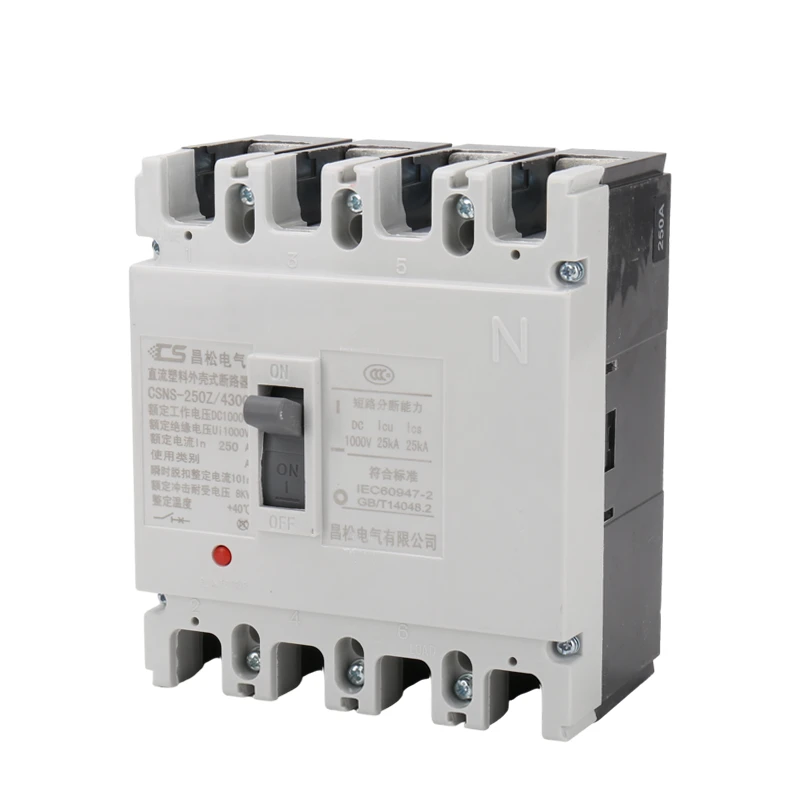
We have 800 Amps Plastic Case Circuit Breaker (MCCB) which can handle high - current applications. These breakers are designed to have low voltage drop and fast response time, making them suitable for protecting high - power audio amplifier circuits.
Our IP65 Distribution Cabinet can be used to house the DC MCBs and other components of the audio amplifier circuit. The IP65 rating ensures that the cabinet is dust - tight and protected against water jets, providing a safe and reliable environment for the electrical components.
In addition, our Rcbo Circuit Breaker Smart offers advanced features such as over - current, over - voltage, and residual current protection. These smart breakers can be integrated into the audio amplifier circuit to provide comprehensive protection.
Conclusion
In conclusion, a DC MCB can be used in a DC audio amplifier circuit, but careful consideration must be given to several factors. While a DC MCB can provide valuable over - current protection, it is important to select a breaker with a low voltage drop, appropriate response time, and good EMC characteristics to minimize its impact on the audio amplifier's performance.
If you are interested in using our DC MCBs for your DC audio amplifier circuit or have any questions about our products, please feel free to contact us for a detailed discussion and to start the procurement process. We are committed to providing high - quality products and excellent customer service.
References
- "Electrical Engineering Handbook", CRC Press
- "Audio Amplifier Design Handbook", McGraw - Hill


